We encounter paper everyday in so many different ways, whether it be by opening up a book or unwrapping a burger from McDonalds, yet many of us don’t care or even notice the different weights, textures, and finishes that are constantly changing with every paper product we encounter.
However, designers are often part of the small percentage of people that notice the different properties of papers along with the power that different papers can hold and the emotions that they can evoke.
Although there’s a lot to consider, here are a few things to consider when choosing the best paper for your project.
Types of Paper
Paper is made for a broad range of different uses, such as industrial paper, sanitary paper, wrapping paper, newsprint, boxboard — you get the idea. However, the most common papers for commercial printing include:
Coated
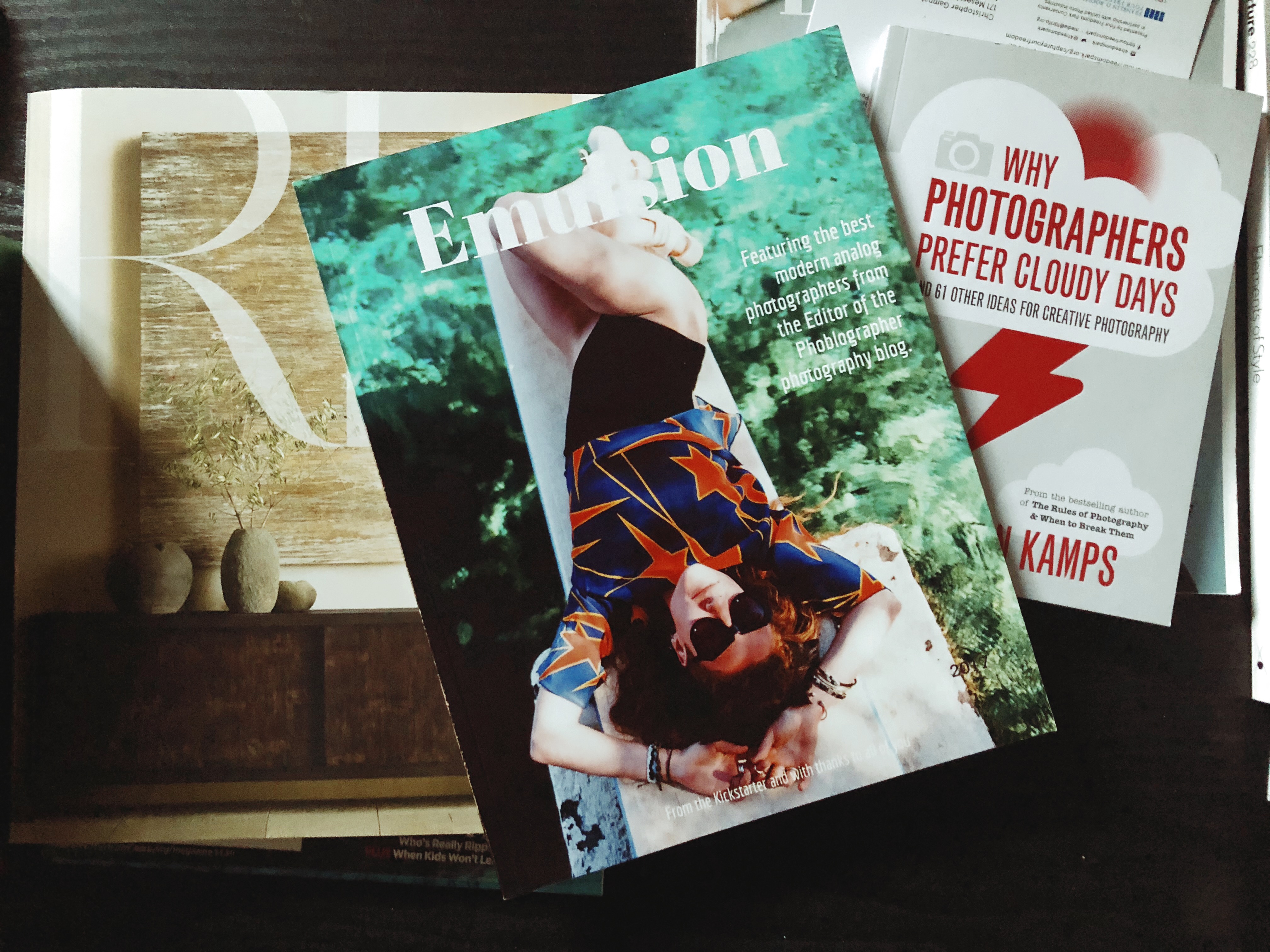
Photo by The Phoblographer
Coated papers have a coating added to their surface before calendaring. This coating restricts the amount of ink that is absorbed into the paper and affects how the ink bleeds. Coated paper is often used for sharp imagery because the ink stays on top of the paper rather than absorbing into it. Because of this, coated paper is the first choice for digital printing, book covers, glossy photos, magazines, etc.
Coatings can be applied to one or both sides of the sheet(s) of paper.
Popular finishes include:
Cast Coated: A mirror-like gloss surface
Gloss: A shiny surface for crisp images in full-color printing
Dull/Silk: Diffused, non gloss surface for solid ink lay and readability
Matte: Low glare surface with a toothy feel, excellent readability
Offset and Opaque
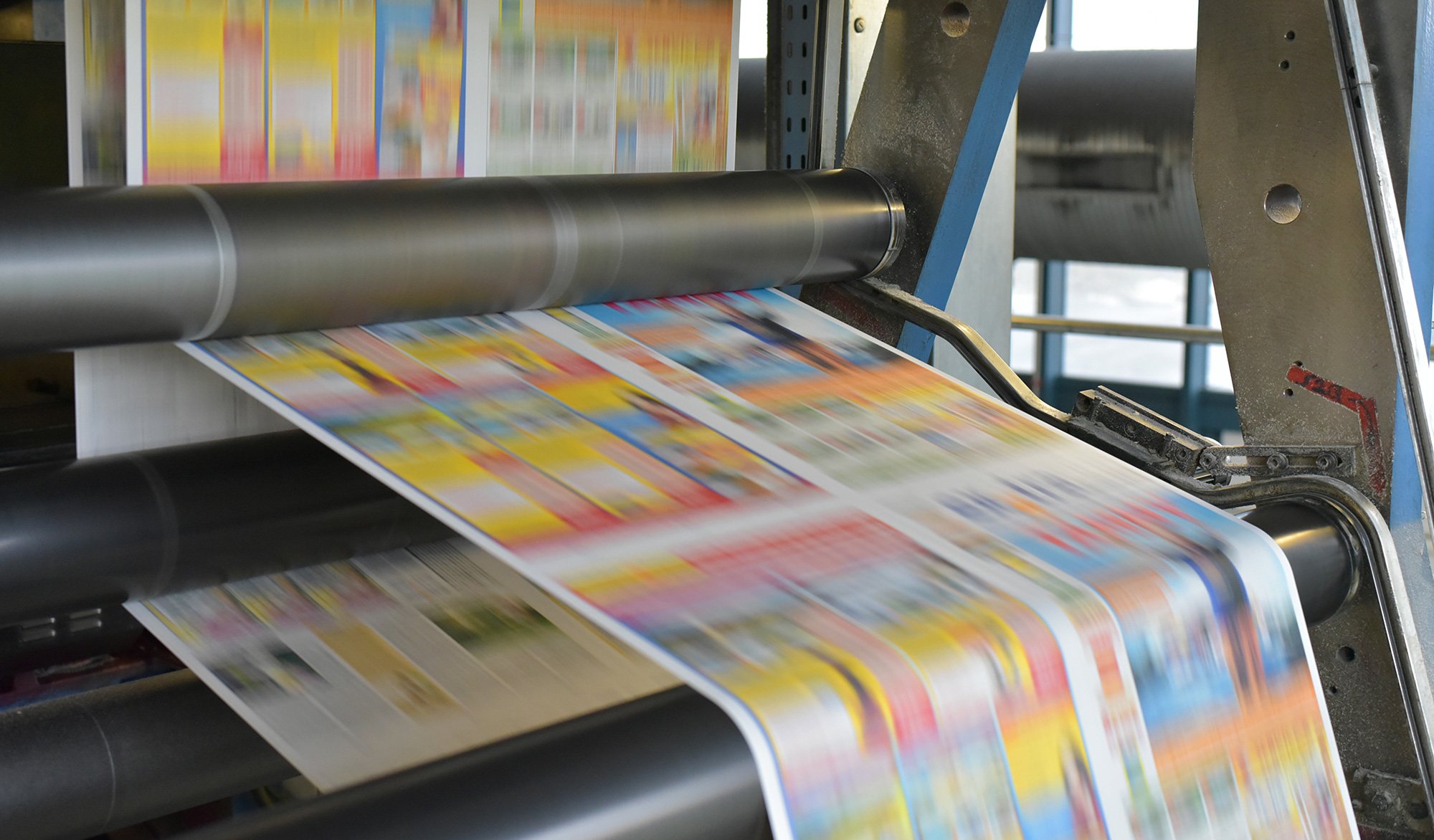
Photo by Design Distributers
Offset and opaque paper are often uncoated with a high surface strength and dimensional stability. These papers are generally sold in large volumes and print well on web presses, but some are engineered to run on digital presses. They come in a broad range of weights with either smooth or vellum surfaces.
Offset papers were developed to run on offset presses and are the workhorse for many printers.
Opaques are opacified papers, which improves their brightness, formation, and surface. They are also very lightweight, making them a very economical option for mail.
Text and Cover
Text and cover papers are more commonly known as premium uncoated printing papers. These papers come in a broad array of colors and finishes, with text pages being lightweight and applicable to pages in booklets and brochures and cover papers being heavyweight and more appropriate for covers and business cards. Double thick covers are achieved by laminating two cover sheets together, resulting in a strong paper with excellent printing and folding characteristics.
Text and cover pages are compatible with all types of printing and specialty processes, including:
- Letterpress
- Offset lithography
- Digital printing
- Engraving
- Thermography
- Foil Stamping
- Screenprinting
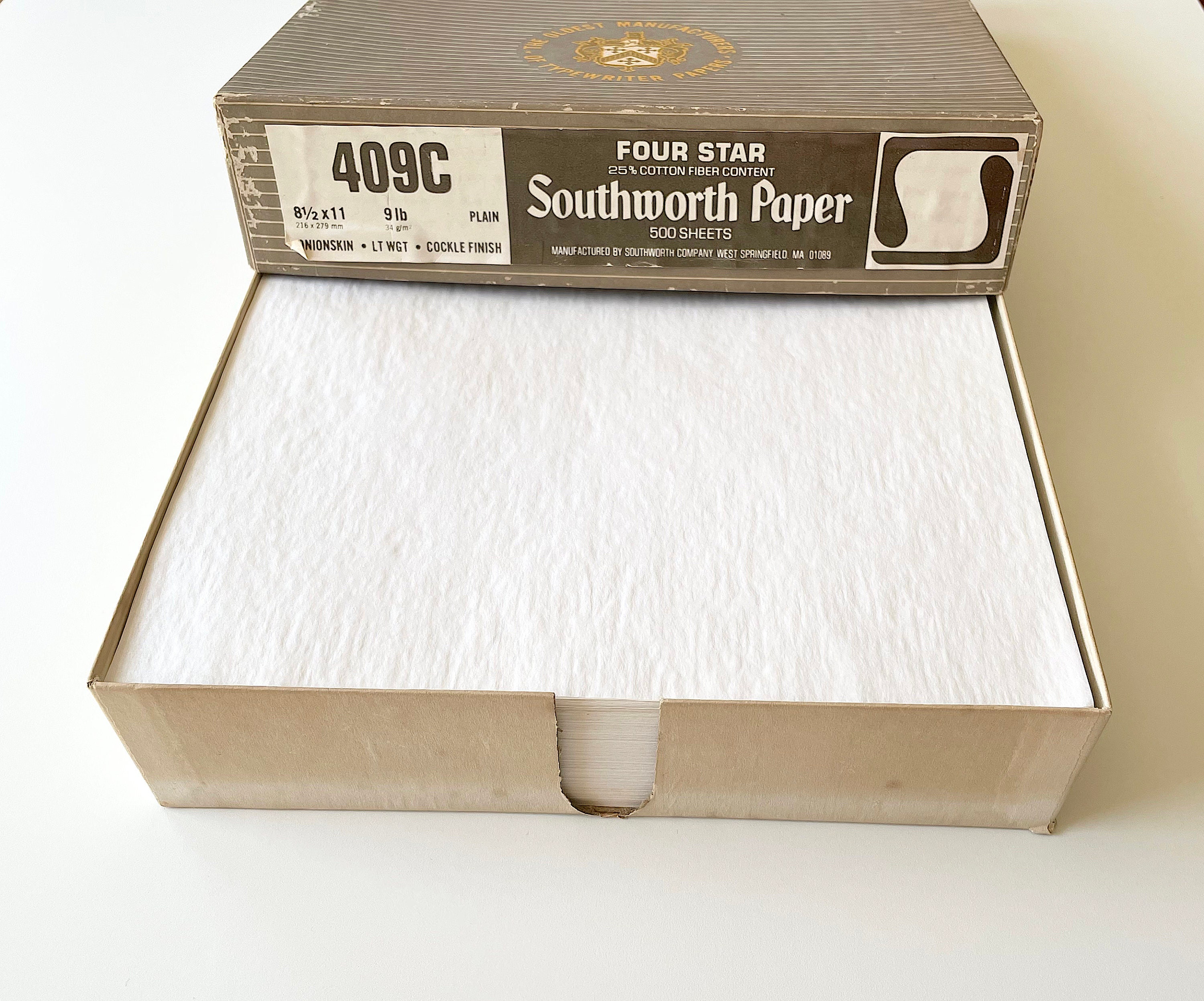
Photo via Etsy
Text and cover papers are characterized by the many textures that lend a tactile quality to printed material. Here are some general definitions.
Cockle: Cockle finish simulates handmade paper with a rough and wavy finish produced by air drying paper with only a small, controlled amount of tension. It is often found in writing or bond papers. A machine-made cockle finish is often designed to mimic the look of handmade paper.
Eggshell: Usually found on uncoated, uncalendered paper, eggshell is a fairly subtle but rough texture. It resembles the surface of an eggshell and may sometimes be referred to as an antique or vellum finish.
Felt: Genuine felt finishes are applied to paper by means of marking felt on the paper machine while the paper is still very wet. The felt imparts a distinctive texture by gently rearranging the fibers and creating a soft resilient surface suitable for printing and specialty print processes such as embossing, foil stamping and letterpress printing. Some felt finishes are embossed off machine.
Groove or Vertical: The wide or narrow linear patterns are usually very pronounced and are created by an off-machine embossing process.
Laid: A linear pattern often found in high-quality writing papers and applied by a dandy roll while the paper is still very wet. The laid dandy roll consists of wires that run parallel to the roll’s axis (laid lines) and chain lines which connect the laid lines and run with the grain of the paper.
Linen: Reminiscent of woven fabric, linen is produced by embossing paper with a patterned roll as a separate off-machine operation.
Smooth: Measured by the Sheffield scale, smoothness is determined by how much the paper is calendered (pressed between rollers) on the paper machine. The lower the Sheffield number, the smoother the sheet.
Vellum: This finish is a more natural, uncalendered machine finish. Some describe it as having tooth, or being toothy (a subtle roughness). It gives a unique hand to the sheet and is usually found in uncoated papers.
Wove: Wove is a natural machine finish. It is a standard smooth even finish with no distinct pattern.
Writing
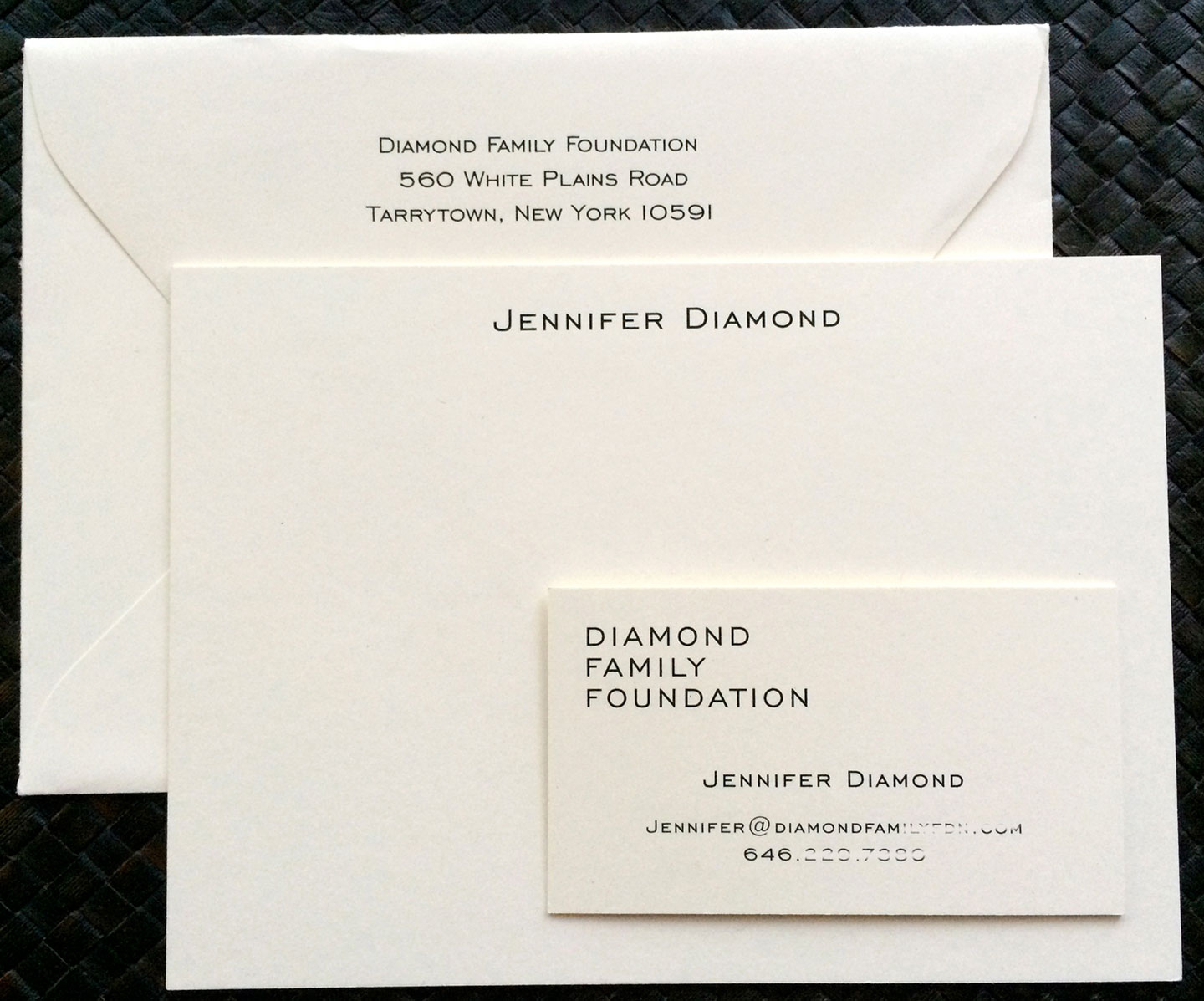
Photo by Dulles Designs
Writing papers, also known as bond papers, are made for letterheads and stationary. They are designed to perform equally well no matter if they’re written on with a pen or pencil, laser printed on, inkjet printed on, engraved, etc. They contain a percentage of cotton fiber for both elegance and strength. 25% cotton is the most popular stationary sheet on the shelves today.
Since these papers are often used for corporate stationary sets, they often contain a watermark and are manufactured with envelopes, labels, and business cards to create a unified business suite.
Popular finishes include smooth, wove, and laid.
Specialty
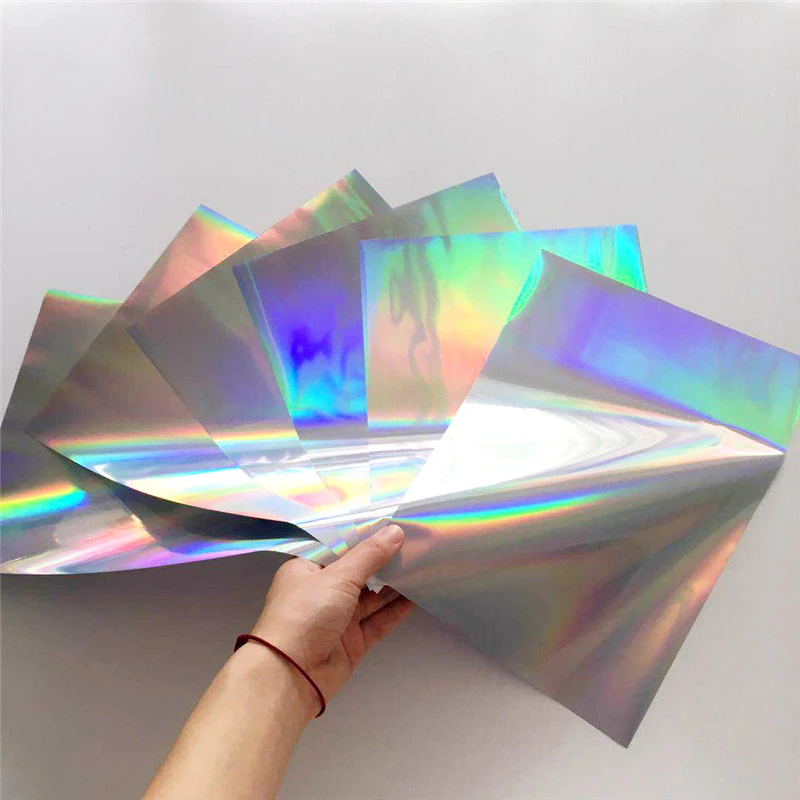
Photo via AliExpress
Specialty papers are so broad that almost anything unconventional can fit into the category. These papers are often memorable and unique but are hard to order and print on.
Some examples of specialty paper include:
- Metallic and pearlescent shimmers
- Glitter and confetti inclusions
- 100% cotton cover
- Translucent paper
- Synthetic/non-tree paper (such as stone paper)
- Industrial paper
Paper Traits
Formation: Formation is the uniformity of fibers within a sheet of paper. In well formed sheets, ink is absorbed evenly for smooth solids and clear reproduction. A poorly formed sheet will exhibit more dot gain and a mottled appearance when printed.
Opacity: Opacity measures how much light passes through a sheet of paper in values from 1 (most transparent) to 100 (least transparent). Basis weight, brightness, type of fibers, fillers, coatings and formation all influence opacity.
Brightness: Brightness is the percentage of light reflected from the surface of the paper. It is not related to color or whiteness. A blue-white paper and a yellow-white paper can have the same brightness but look very different. For projects with lots of copy, a natural shade of white is preferred by most.
Finish/Smoothness: The finish of a sheet of paper affects ink receptivity and ink holdout. Smoothness is measured on the Sheffield Scale, with a higher value being rougher and a lower value being smoother.
Side-to-side consistency: Finished paper has two sides: the wire side (comes in contact with wires on the paper machines) and the felt side (does not come in contact with wires on the paper machines). Smoother papers have a better side-to-side consistency, and will print well on both sides.
Printability: Determined by formation, smoothness, brightness, opacity, and surface coating.
Permanence: Acid-free papers prevent deterioration over time. The lifespan of acid-free paper is hundreds of years compared to just decades for acid paper.
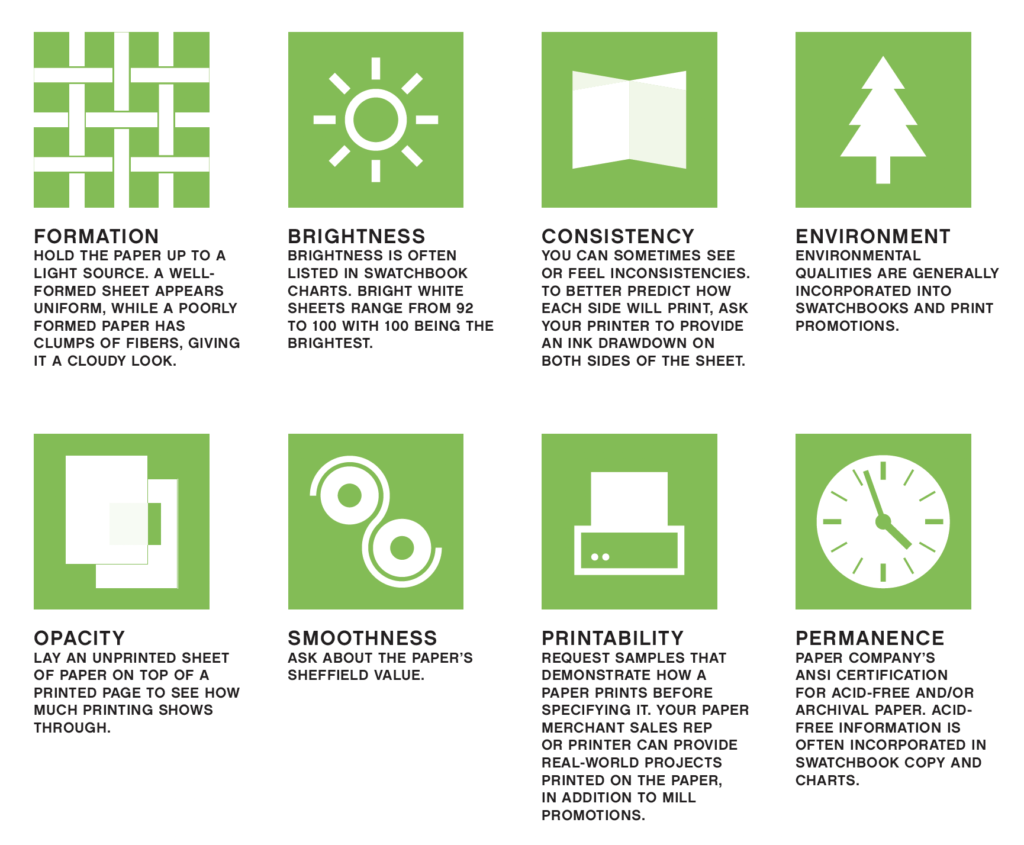
Screenshot from Mohawk, “Paper Basics”
Paper Weights
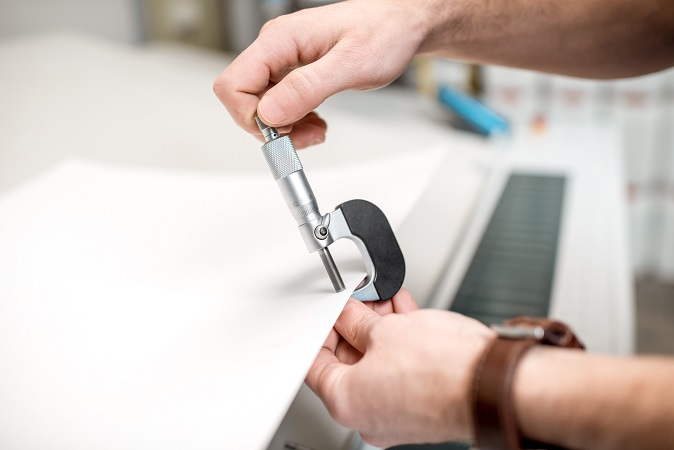
Photo by ChilliPrinting
Caliper: Caliper indicates a paper’s thickness, measured in thousandths of an inch. A paper’s caliper can be read either as .007 or as 7 point, and is affected by its weight and finish.
M Weight: Term used for the weight of 1,000 sheets of a given size.
Basis Weight: Term used for the weight of 500 sheets of a given size.
GSM: The metric system measures paper weight in grams per square meter (g/m2 or GSM). The scale is continuous, meaning that all categories of paper use the same scale. Many swatch books provide GSM equivalents.
Paper Sizes
Each paper in the A range is half the area of the preceding size. For example, A2 paper is half the size of A1 paper, A3 paper is half the size of A2 paper, and so on and so forth. This way, the proportions remain the same.
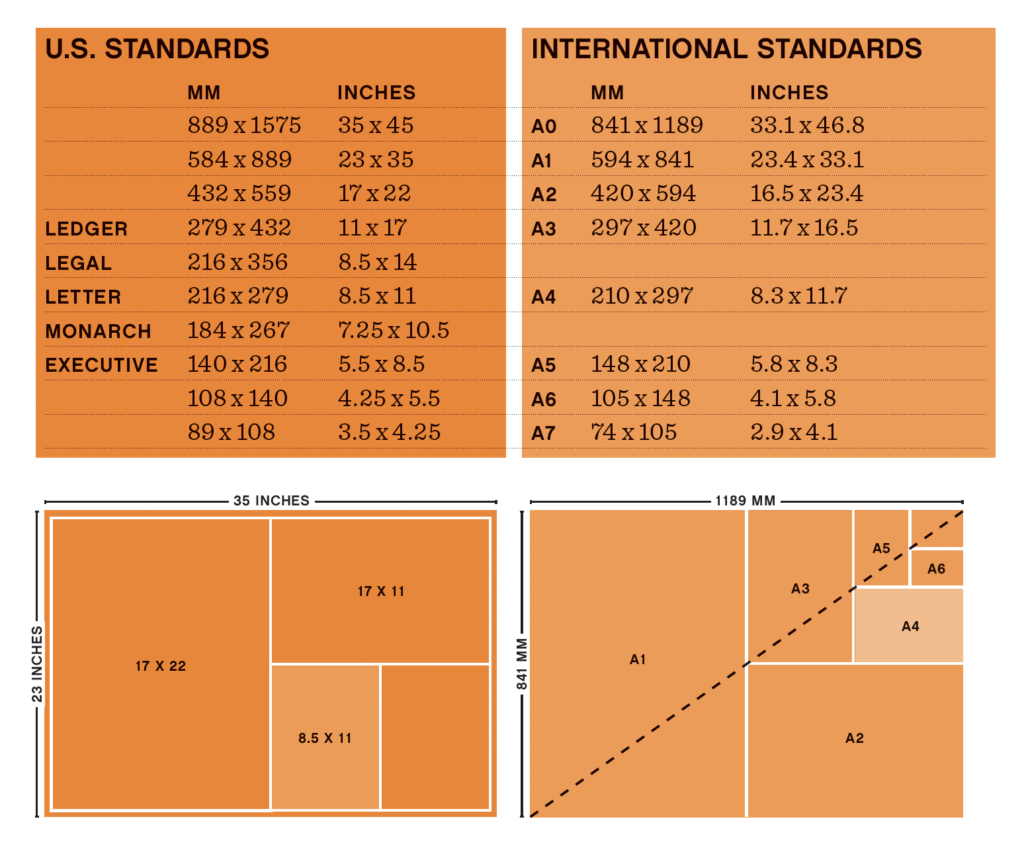
Screenshot from Mohawk, “Paper Basics”
Hopefully this blog has allowed you to look at all the different characteristics that paper can have, making it unique and memorable. The next time you open up a magazine or unwrap that double cheeseburger, I hope you take a second to stop and appreciate the attention to detail that went into the paper choice in your hands. I also hope that these tips help you choose the right paper medium for your next design project!
References
Mohawk. “Paper Basics.” 2015. PDF file.
https://blog.thepapermillstore.com/ultimate-guide-card-stock/part-3-paper-finishes-colors/
https://www.ibm.com/docs/en/i/7.4?topic=management-paper-characteristics