Everyone at one point in their life has folded up a piece of paper, but many are unaware of the technical folds or the names of said folds involved in the production process. Throughout this blog post, I’ll be telling you a little bit about some of the main low to moderate budget folding techniques that are sure to still deliver a high impact.
Half Fold
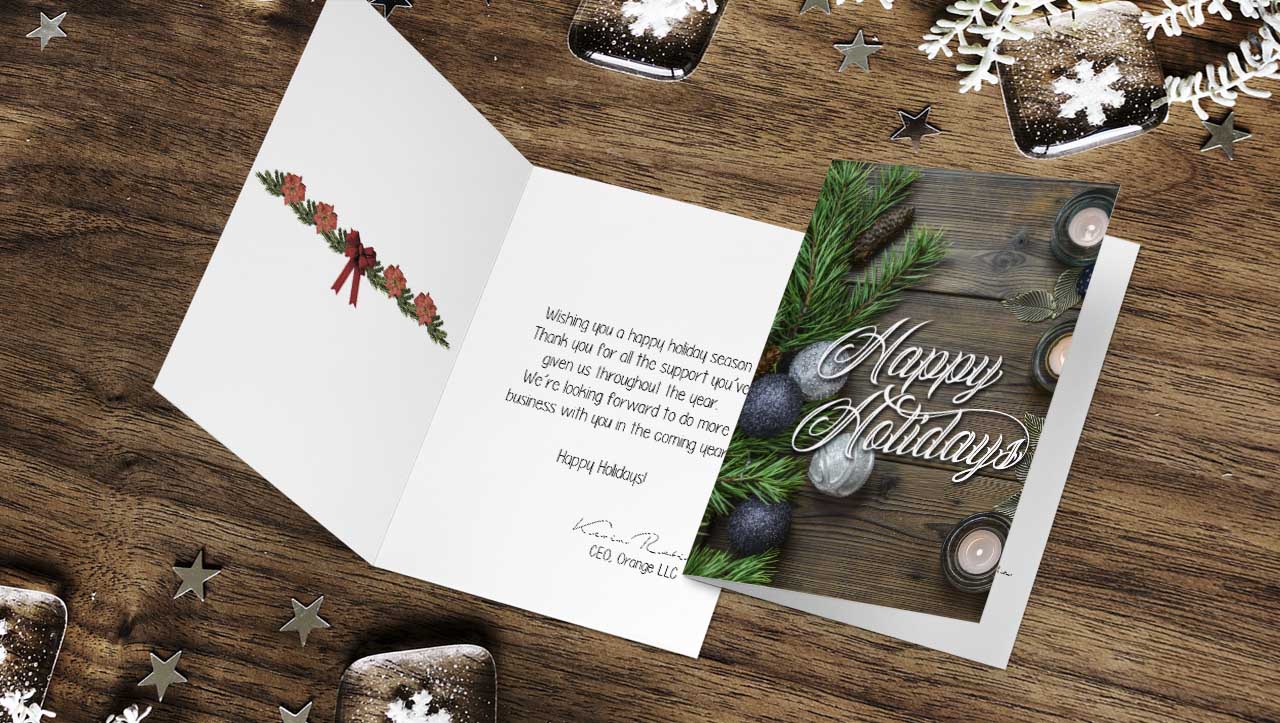
Half Folds are often used for things such as greeting cards, announcements, invitations, menus, programs, and books. The Half Fold is one of the most simple and inexpensive ways of folding, thus why it is widely. A Half Fold can be either vertical (hot dog style) or horizontal (hamburger style).
Tri Fold
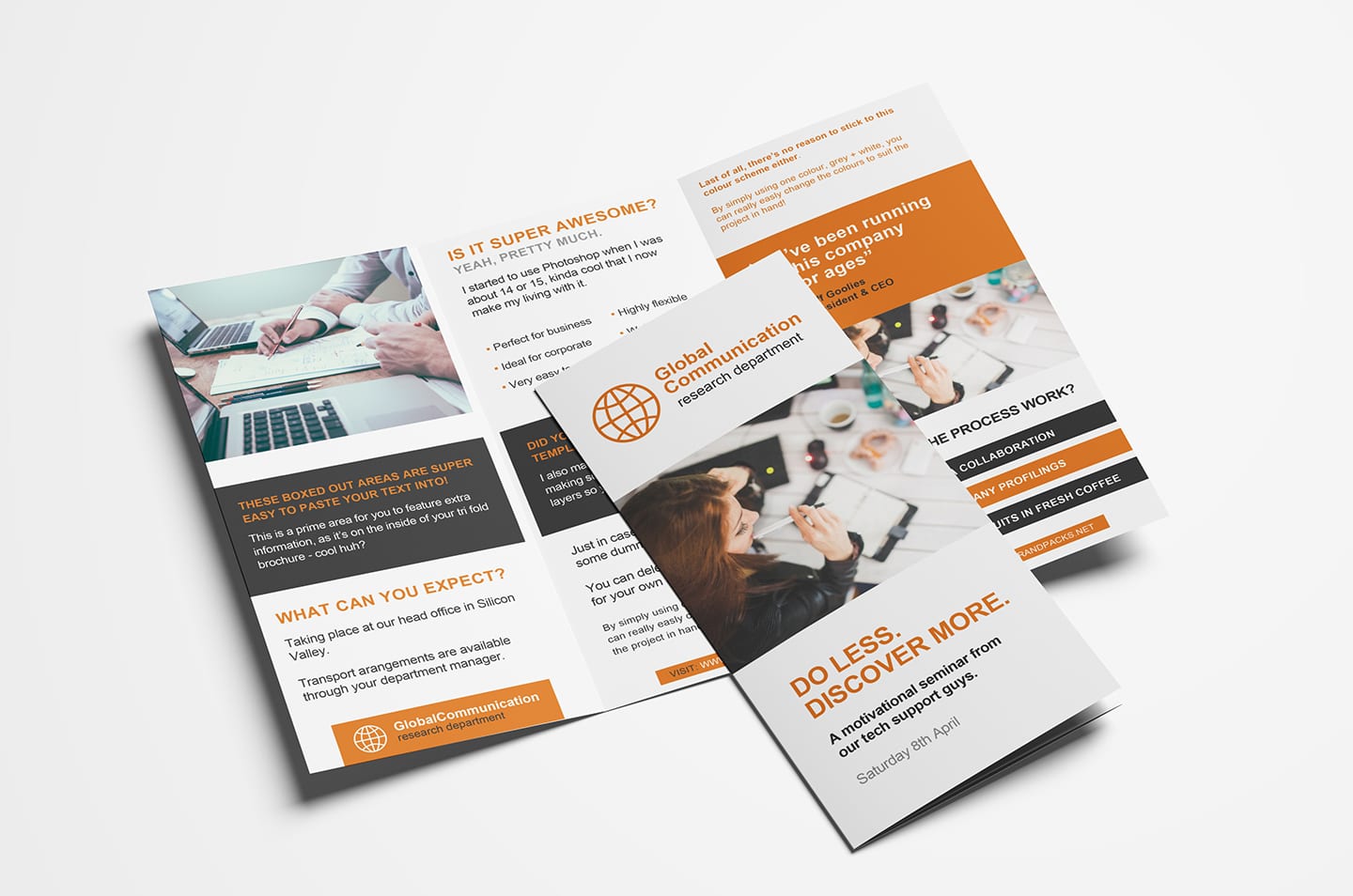
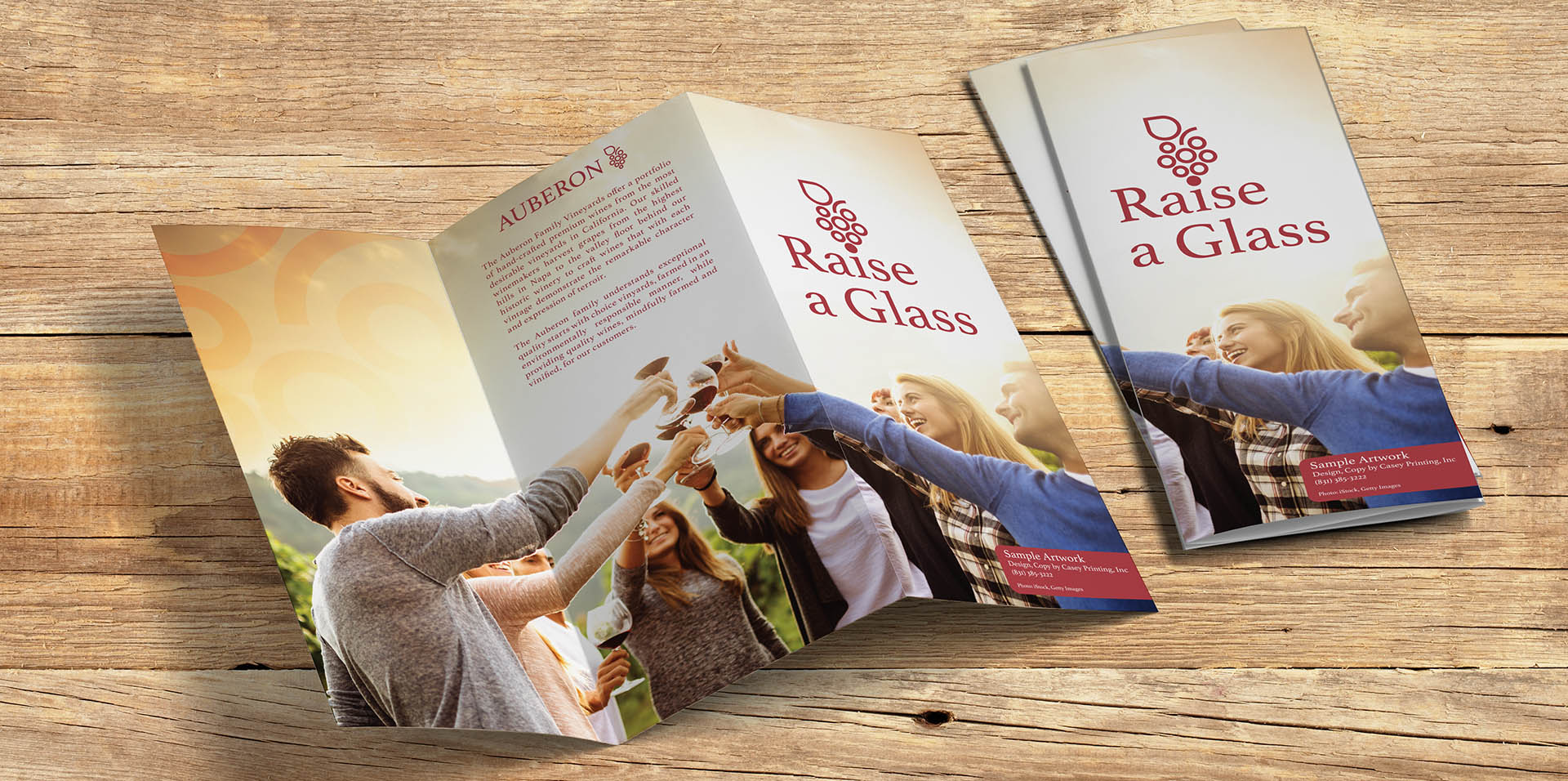
Tri Folds (Also called Letter Folds or C Folds) are often used for brochures, statements, invoices, letters, and flyers. Tri Folding is beneficial because it is only 2 folds, but it sections the paper into 6 different sections for printing (3 on the front and 3 on the back) that can be folded in on itself. Another perk of a Tri Fold document is that if an 8.5×11 paper is used when it is folded up, it fits nicely into a standard #10 envelope.
Z Fold
Similar to a Tri Fold, a Z Fold document allows the average size paper to be folded up into a size fit for a #10 envelope as well as creates 6 different sections to print on. However, a Z Fold document doesn’t fold in on itself, its flaps fold back and forth to create a Z. This makes for an easy to handle handout that opens from left to right. Much like Tri Folds, this folding technique is most often used for brochures, letters, invoices, statements, and special handouts.
Accordion Fold
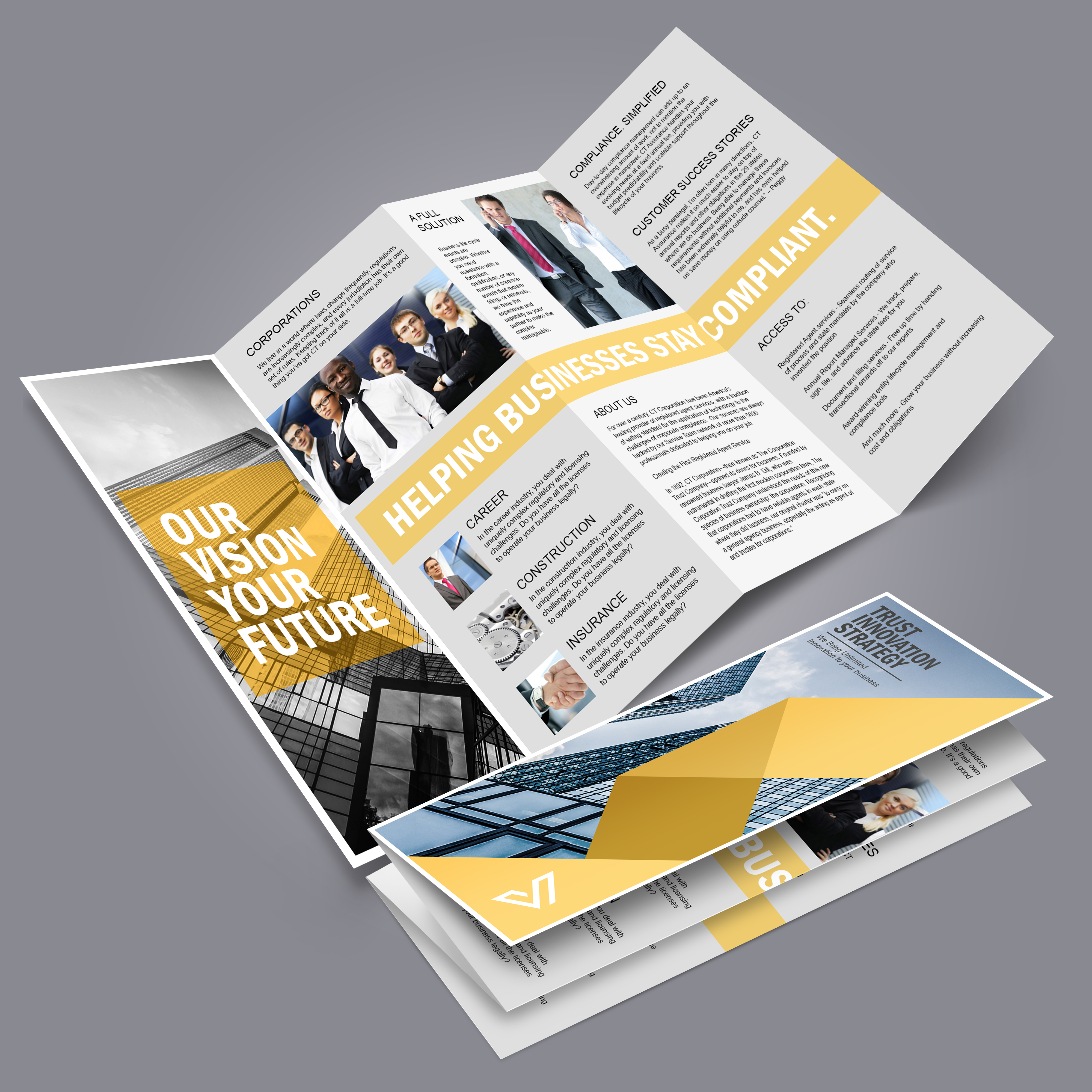
Accordion Fold documents use a series of alternating folds to create multiple panels of the same size that fold out similar to an accordion. This folding technique can create a large amount of equally sized sections, but the most common is folded three times, creating 4 sections for printing. This method is used for flyers, brochures, letters, and other mailing programs.
Gate Fold

A Gate Fold features two panels that fold in to meet each other in the center. This creates a “gate” when the document is open, with the center section being the largest and most important. This folding technique is often used for brochures and advertising, and creates 6 sections, 2 of which (the center sections) are twice the size of the other 4 (the outside flaps).
Double Gate Fold

A Double Gate Fold is the same idea as a regular Gate Fold, but with the center sections being folded in half as well to create 8 even sized sections for printing while still being able to open the document’s flaps like a gate. This printing technique is also commonly used for flyers, brochures, and other pamphlet handouts.
Roll Fold
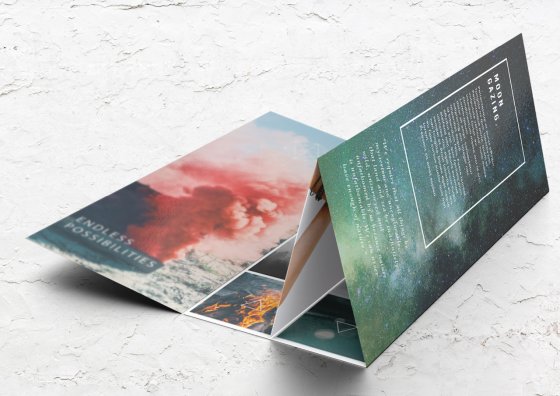
A Roll Fold document involves 3 folds that split the document into 8 even sized sections for printing. These folds roll in on each other to make for easy handling and are most commonly used for brochures, step-by-step instructions, and advertising.
Double Parallel Fold

A Double Parallel Fold consists of a paper folded in half and then folded in half again. This folding technique creates 8 different sections to print on that can be easily folded up into a manageable size. This method is most often used for promotional leaflets, brochures, flyers, and self-mailers.
French Fold

A French Fold document is folded horizontally once, then folded again vertically to create 8 even-sized sections for printing. A large reason the French Fold technique is used is because it can make the document a much smaller size for easier transportation and distribution. This folding technique is most often used for brochures, greeting cards, and event booklets.
Map Fold

A Map Fold document consists of a paper that has been folded in half horizontally, then Tri Folded (folded twice) vertically. This folding method creates 12 even sized sections for print, and is most commonly used for larger documents such as maps (hence the name, duh), charts, posters, and other large-scale diagrams.
Other techniques
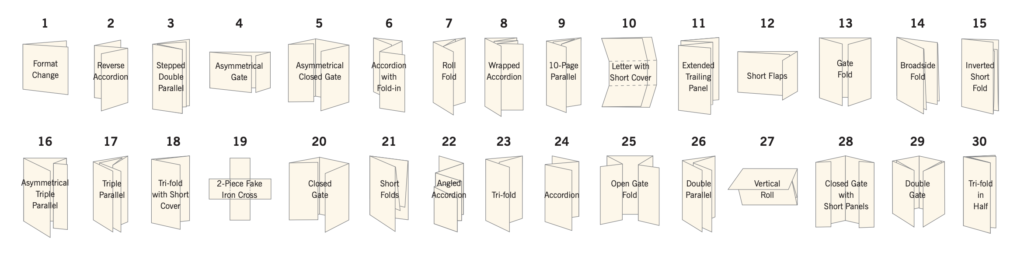
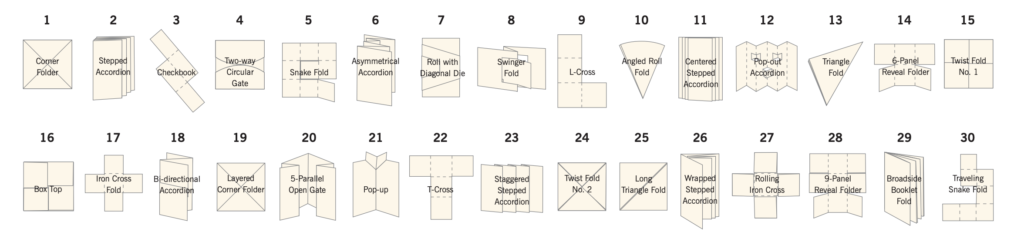
There are hundreds of other folding techniques out there, some more low-budget and some more pricey. Pictured above are some more methods of low to mid budget folding (top) and some more expensive methods (bottom). The best technique for your project is up to you in the end, but I hope this blog has given you a bit more insight into the different kinds of folding and how they’re commonly used in our everyday lives.
References
https://www.baumfolder.com/guide-8-popular-folds/
https://www.visual-graphics.de/en/customer-care/paper-folding-types/
Folding for the Frugal, PDF, Sappi, foldfactory.com.